Aluminium or Metal Chair? A Detailed Comparison
Which is better — an aluminium chair or a metal chair?
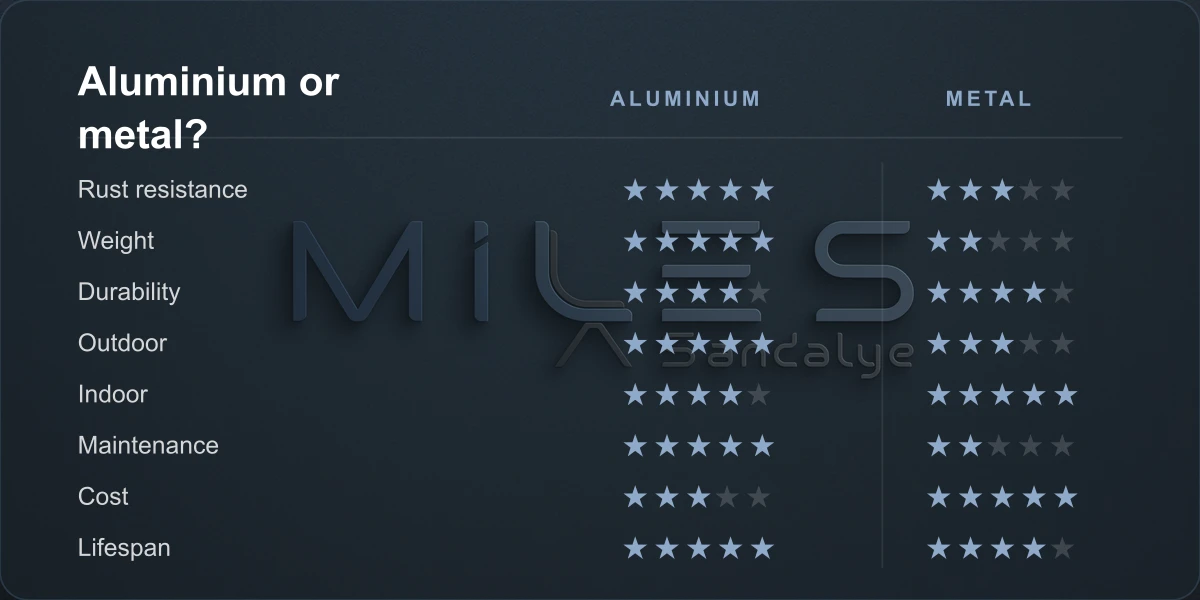
An aluminium chair is lightweight and naturally rust-free; it is ideal for humid outdoor areas such as seasides and poolsides. A metal chair is more economical and sturdy; when protected against rust with cathodic e-coating it lasts a long time both indoors and outdoors. The right choice depends on the venue's location, humidity level and budget.
Rusting and outdoor resistance
Aluminium does not rust naturally; it lasts for years without maintenance in seaside and constantly humid areas. Metal, on the other hand, rusts if left unprotected — but cathodic e-coating (KTL) removes this risk. E-coated metal can be used safely outdoors as well; only powder-coated metals without e-coating may rust over time.
Knowing where the difference comes from helps when specifying. Powder coating covers the outer surfaces a spray gun can reach; the inside of weld seams, tube openings and screw seats often stay thin. Rust usually starts exactly there, at the thinnest-coated point, and spreads unseen from the inside. Cathodic e-coating works by immersion instead: the frame is dipped into a bath and an electric current deposits the coating evenly on every surface it can reach — including the inside of closed sections.
In practice this means that in salty, humid coastal air the first rust spots on an uncoated metal chair appear at the welds within a few seasons. Aluminium carries no such risk, because the oxide layer that forms on its surface protects the metal underneath. E-coated metal sits safely between these two extremes.
Weight and ease of use
Aluminium is lightweight; staff can move the chairs easily during daily arrangement and cleaning. Metal is heavier and more stable; this can be an advantage against tipping over in windy outdoor areas.
This looks like a minor line in a catalogue, but it is felt every day in operation. If a terrace is set out each morning and cleared each evening, staff carry the same chair twice a day. On a forty-cover terrace that adds up to thousands of lifts over a season; even a few hundred grams per chair changes the workload and how long clearing takes. Lighter frames are also gentler on the floor: heavy frames dragged across timber decking or ceramic tiles are more likely to leave marks.
Weight is not always a drawback, though. In open, wind-exposed areas a heavier frame stays put; empty chairs blowing over and knocking into each other mean both noise and scratches. In venues that store furniture over winter, stackability matters more than weight — storage space is usually scarcer than the chairs themselves.
Cost and durability
Metal chairs are generally more economical and offer high impact resistance. Aluminium, with its light weight and rust-free nature, lowers long-term maintenance costs especially outdoors. Total cost of ownership should be assessed according to the venue's location and usage intensity.
Comparing on unit price alone is misleading. The better question is: after how many seasons will this chair be replaced? If an e-coated metal chair and an aluminium one serve the same number of years, the difference in initial outlay is a real saving. But if an unprotected metal frame rusts by the third season at the seaside and has to be replaced, the cheaper-looking option becomes the expensive one at the second purchase.
A third item belongs in the calculation: refinishing. A metal frame can be repainted years later, which refreshes the look without replacing the furniture. With aluminium the metal beneath the paint does not rust, so refinishing is usually driven by aesthetics — a change of concept rather than decay. In busy interiors the deciding factor is not rust but impact: for a chair that knocks against tables, gets dragged and is stacked daily, frame strength comes first.
Which one for which venue?
A practical summary:
- Seaside, beach club, poolside → Aluminium (rust-free)
- Indoor cafe/restaurant → E-coated metal (economical, durable)
- Hotel terrace, garden → Aluminium or e-coated metal
- High-impact / heavy-traffic indoor → Metal
Browse the models covered in this article
Aluminium Chairs
Frequently Asked Questions
Which is better — an aluminium chair or a metal chair?
An aluminium chair is lightweight and naturally rust-free; it is ideal for humid outdoor areas such as seasides and poolsides. A metal chair is more economical and sturdy; when protected against rust with cathodic e-coating it lasts a long time both indoors and outdoors. The right choice depends on the venue's location, humidity level and budget.
Is an aluminium chair more expensive than metal?
Aluminium is usually slightly more costly than metal due to raw material and labour. However, it can provide a long-term advantage by lowering outdoor maintenance and replacement costs.
Is a metal chair as durable as aluminium?
E-coated metal is very long-lasting when protected against rust, and it has high impact resistance. Aluminium's advantage is weight and natural rust resistance; metal's advantage is sturdiness and cost.
What do you recommend for a mixed (both indoor and outdoor) project?
Using e-coated metal indoors and the aluminium or rust-free variant of the same series outdoors provides both visual consistency and the right durability.